
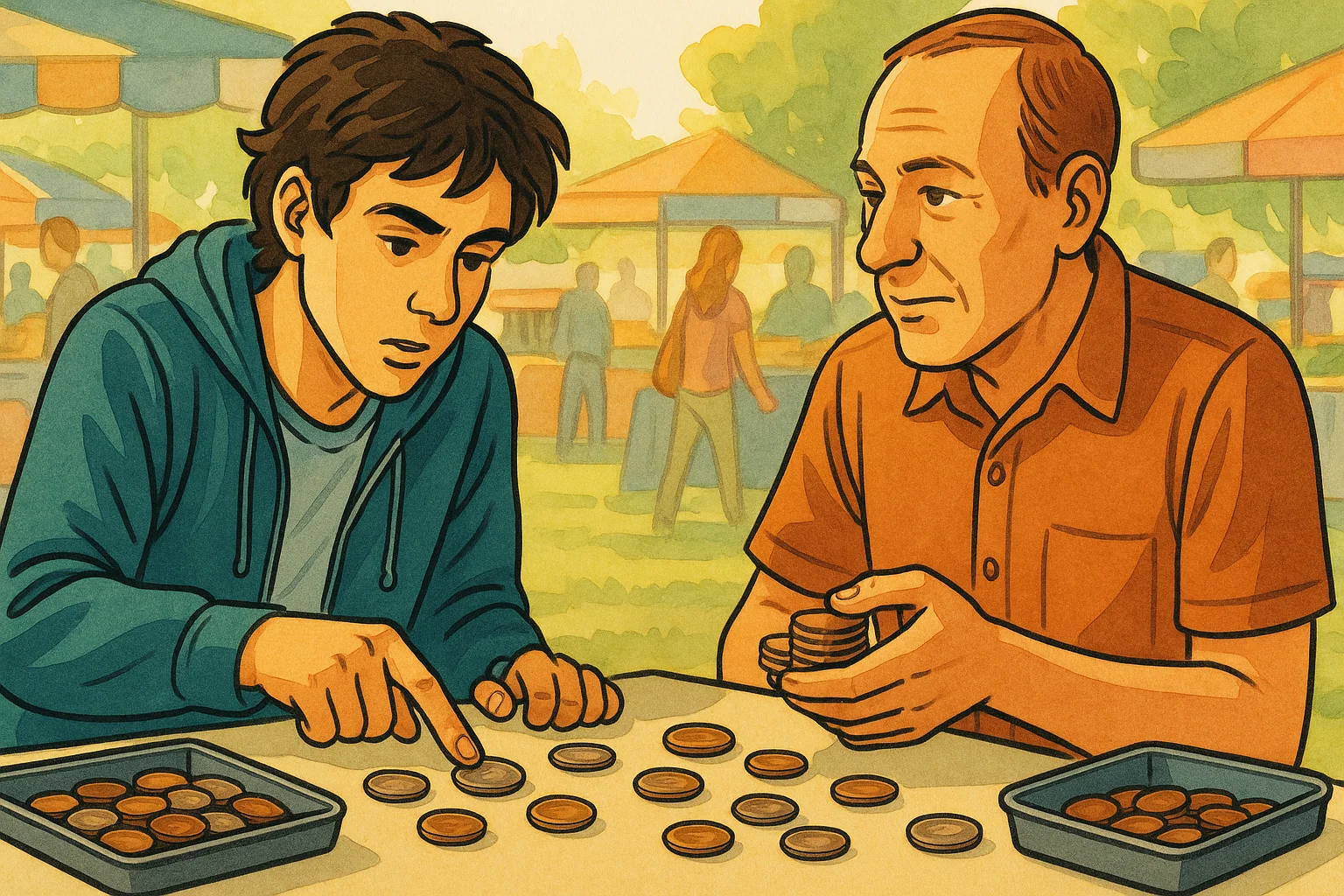
Flea markets offer one of the most exciting environments for finding undervalued coins. Estate leftovers, inherited jars, and casual vendors often bring coins worth money that never pass through traditional shops or auctions. Yet the same setting also carries risks—cleaned coins, misidentified dates, counterfeits, and inflated prices. A successful trip begins long before you reach the market stalls.
Build a Simple but Effective Toolkit
A few small tools make a huge difference when evaluating coins on the spot. Pack items that fit easily into a pocket or small bag:
- 10x loupe for spotting wear, doubled dies, and mint mark details
- Compact flashlight to reveal surface issues under angled light
- Digital scale for verifying standard weights noted in the Red Book
- Reference book or digital price guide to confirm melt values and common mintage ranges
- Cotton gloves for handling higher-grade pieces without fingerprints
This compact setup allows you to inspect most coins quickly and with confidence. It also signals to vendors that you know what you’re doing, which discourages attempts to oversell questionable pieces.
Research Prices Before You Arrive
Flea market pricing varies dramatically. Some sellers price coins at melt value; others assume rarity because of age. Reviewing current Greysheet, Red Book, or online marketplace and coin scanner app’s ranges helps you recognize genuine bargains. Focus on:
- Common silver coins and their melt-based ranges
- Key dates in popular U.S. series
- Current premiums on circulated examples
This preparation prevents impulse buys driven by excitement instead of value.
Arrive Early and Walk the Rows Strategically
The best finds appear in the first hour. Dealers set out new stock, and casual sellers offer items they haven’t researched. To maximize success:
- Visit coin-labeled booths immediately
- Ask simple questions like “Any old silver or errors today?”
- Check under tables or inside boxes marked “miscellaneous”
Flea markets reward curiosity. Some of the best pieces hide in bins of mixed world coins or small trays that other buyers overlook. A simple check-up via a free coin value app can bring you a treasure in a second.
Know What Makes a Flea Market Coin Desirable
Pre-1965 U.S. silver, low-mintage issues, early dimes, and unsearched rolls form the core of worthwhile targets. Recognizing red flags—excessive shine, odd weight, wrong fonts—keeps your budget safe and your collection growing.
Prioritize the Right Tables and Ask the Right Questions
Once you’re moving through the aisles, the key is to evaluate coins quickly without losing accuracy. Flea markets are busy, loud, and fast-paced, so your decisions must balance caution with efficiency. Knowing what to look for—and what to avoid—turns a chaotic environment into a productive treasure hunt.
Start with vendors who display trays, flips, or small boxes labeled with dates and denominations. These sellers usually know the basics but still price many items below market. Good opening questions include:
- “Do you have any older silver?”
- “Any error coins or unusual dates today?”
- “Got anything from an estate box this week?”
These prompts often lead vendors to reveal items stored behind the table or kept aside for interested buyers.
Recognize Valuable Traits Quickly
Flea market finds usually fall into three rewarding categories:
- Pre-1965 U.S. Silver — Washington quarters, Roosevelt dimes, and Franklin halves often appear near melt value.
- Key or semi-key dates — Look for 1916-D dimes, 1921 Morgans, early wheat cents, and low-mintage nickels.
- Error coins — Off-center strikes, clipped planchets, and strong doubled dies stand out even in circulated bins.
Avoid overly shiny coins. Excessive brightness usually means cleaning, and cleaning wipes out much of the collectible premium.
Use Quick On-Site Tests to Avoid Fakes
You don’t need a full lab setup to spot red flags. Rely on simple checks that take only seconds:
| Essential Check | What to Look For | Red Flag |
| Weight / Diameter | Matches Red Book specs | Off by 0.5 g+ |
| Mint Marks | Sharp and era-correct | Wrong font or placement |
| Luster / Edge | Natural tone, intact reeds | Polished or smoothed |
| Price vs. Melt | 10–20% over spot maximum | Triple melt or more |
Magnets also help test supposed silver coins. Genuine 90% silver shows almost no attraction. If it sticks strongly, walk away.
Hone Your Negotiation Approach
Negotiation is part of the culture. Open respectfully but assertively. For example:
- “Nice coin, but the bag marks bring it down—would you do $10?”
- Offer 50–60% on group lots. Vendors expect counteroffers.
- Bundle purchases to justify a better deal.
Never fear stepping away; many sellers call you back with a lower price.
Verify Each Coin in Better Lighting
Even the best-looking flea market deals need proper verification once you get home. The fast pace of a market can hide details you’ll want to recheck under better lighting. A careful post-hunt routine protects your budget, confirms authenticity, and turns a fun outing into genuine collecting progress.
At home, spread your finds on a clean surface and inspect them one by one. Use a stronger light source, a 10x loupe, and your digital scale to confirm:
- Weight matches the Red Book specifications
- Edges show natural wear rather than artificial smoothing
- Mint marks are sharp, centered, and stylistically correct
- Surfaces display natural luster instead of chemical brightness
Take clear photographs from multiple angles. This not only documents your purchase but also helps when asking for second opinions from trusted forums or grading communities.
Use Digital Tools to Confirm Value
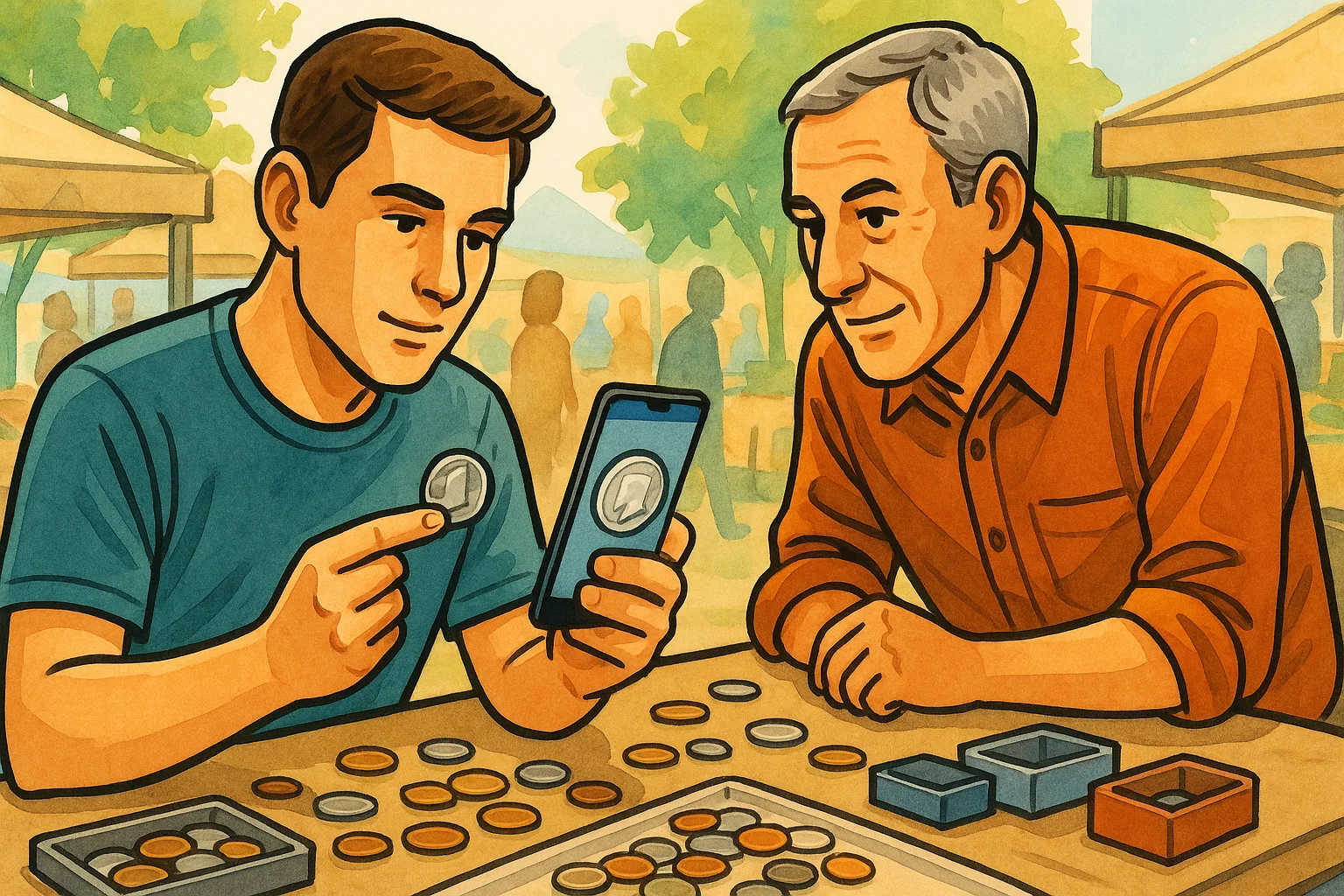
Modern collectors rely on fast verification. The Coin ID Scanner app simplifies this step. Upload a photo or take one in-app to instantly access:
- Mint year
- Metal composition
- Diameter and weight comparisons
- Estimated market price based on over 187,000 cataloged coins
These details help you confirm that your flea market instincts were accurate. The app is especially useful for error coins or pieces with unfamiliar designs. When something feels “off,” scanning is a quick way to prevent future disappointment.
Store Your Finds Properly
Even circulated coins deserve safe storage. Use:
- 2×2 cardboard flips for inexpensive finds
- PVC-free holders to avoid chemical damage
- Small boxes or album pages for organization
Label each holder with the date, mint mark, price paid, and any notes. Keeping good records helps you track which vendors and markets produce the best results.
Build Long-Term Momentum
A flea market haul should feed directly into a long-term collecting strategy. After sorting your coins, log them digitally. The Coin ID Scanner’s collection management features and premium smart filters or AI Helper make it easy to catalog your additions, avoid duplicates, and identify gaps in your sets.
Finally, reflect on your outing:
- Which tables offered the best value?
- Which negotiation tactics worked?
- What tools proved most useful?
Every trip improves your skills, making the next hunt even more successful. With preparation, verification, and consistent organization, flea market coin buying becomes a rewarding part of your collecting journey.